In mid-April, it was time for the project consortium to meet again for a second workshop. This time, the topic was to discuss technical specifications and interoperability of the proposed circular charging ecosystem. We met straight at the location of our proposed installation – Närkefrakt terminal in Pilängen logistics area in Örebro.
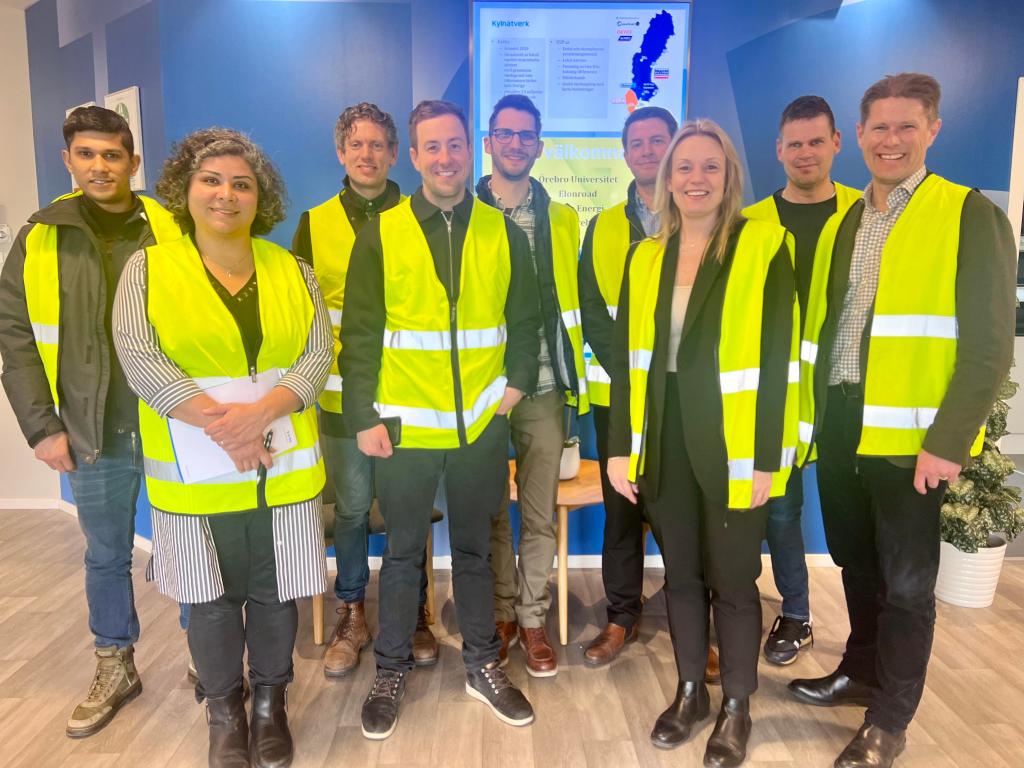
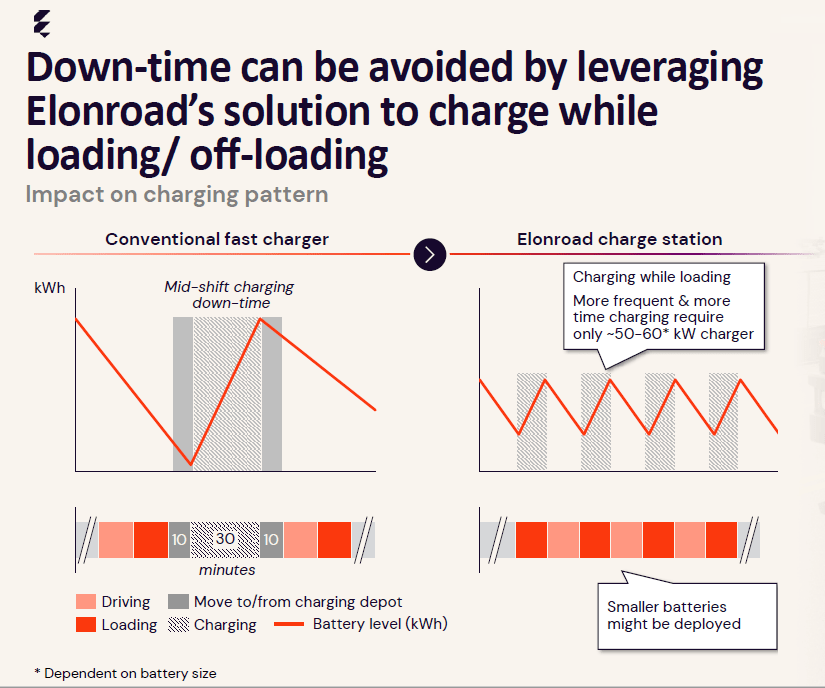
This workshop served a dual purpose: first, to see the area where the proposed charging ecosystem would first be tested in real-life application together with understanding the spatial and operational parameters and limitations. Second, we discussed the technological specifications of the charging solution, including its placement within the area. Toby and Archi from Elonroad presented the parameters of their proposed flexible charging solution. We liked the idea on the following picture – with flexible charging when loading and unloading vehicles, the total battery capacity can be smaller to achieve the same range. If applied to the whole fleet, this could lead to overall more efficient and less resource intensive on heavy metals and chemicals.
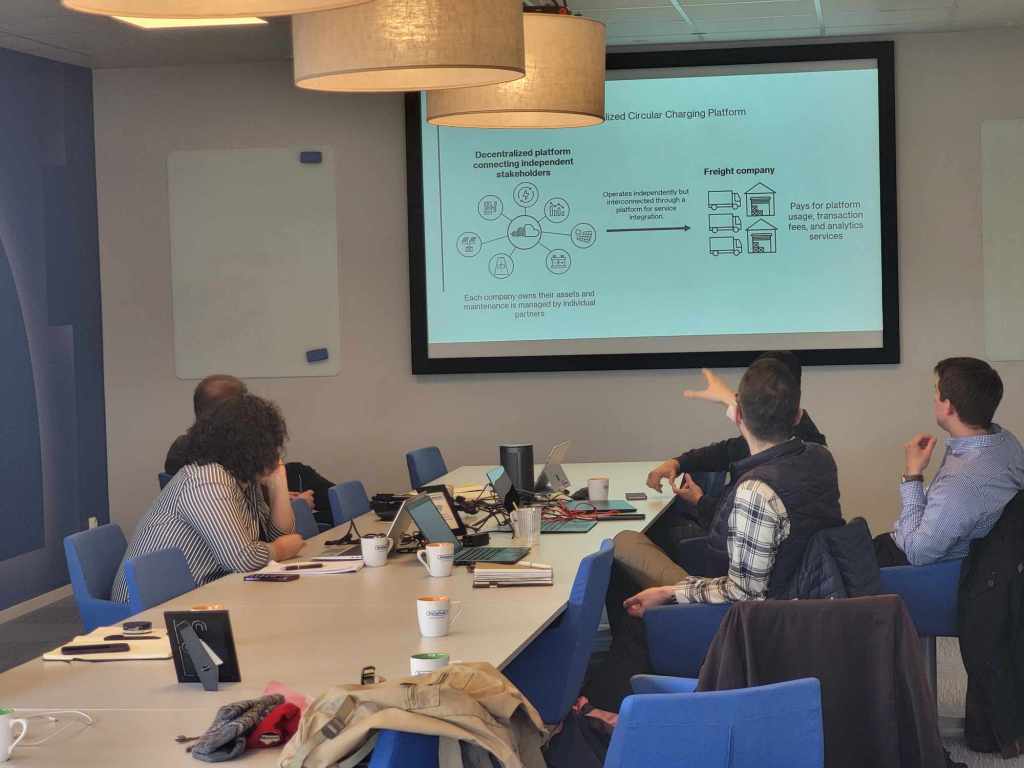
We followed this presentation with a short summary of the results of the previous workshop (report here) on business models as systemic interventions to implement circular business models for freight transport (we’re working intensively on getting our results published!), focusing on three alternatives – charging-as-a-service, decentralized digital platform and integrated solution provided by a technology consortium.
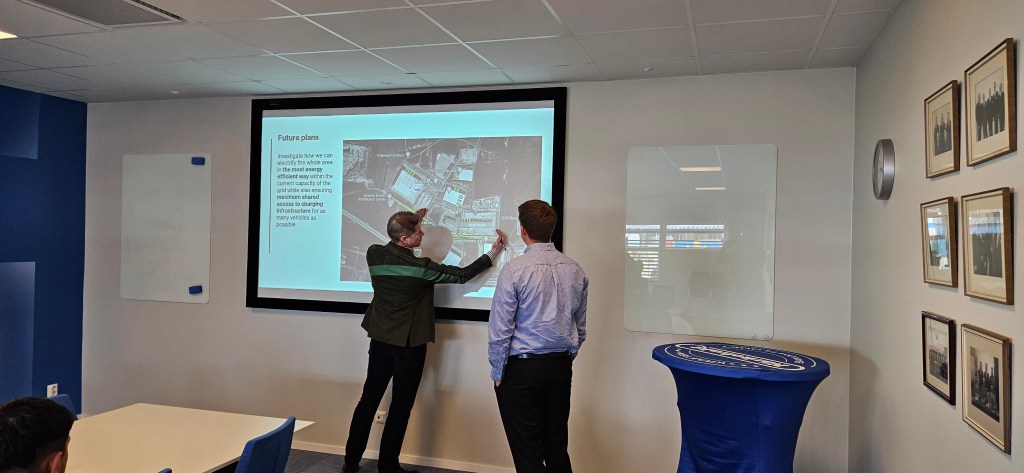
After this presentation, we want straight into business and presented our long-term vision for the area which includes several circular charging solutions integrated in a systemic way with potential for testing Electric Road Systems. This included discussing funding opportunities that would enable us to experiment with technology, business models and sharing access to both dynamic and static charging for haulers within Närkefrakt, but also beyond that in the whole Pilängen logistic area. By combining these aspects, we could:
- increase access to charging solutions for haulers within Närkefrakt;
- explore decreasing grid load in the area by utilizing shared charging solutions;
- and overall increase systemic efficiency by increasing range of smaller battery size vehicles with flexible charging systems.
 CIRC-S Project Website