The CIRC-s project, funded by the Swedish Knowledge Foundation, aims to pioneer transformative approaches in freight transportation, addressing drastic decarbonisation needs through circular electrification solutions. Given the urgent climate challenges and the freight transport sector’s significant contribution to greenhouse gas emissions, it is imperative to accelerate the adoption of low-carbon innovations in this sector.
Research Aim
Our central inquiry: How can we integrate advanced charging technology, innovative business models, and shared financing strategies to create cost-effective and resource-efficient circular solutions for freight transport electrification? This investigation is crucial for developing more systematic and resource-efficient approaches to road freight electrification in Sweden, contributing significantly to the nation’s goal of a circular economy by 2045.
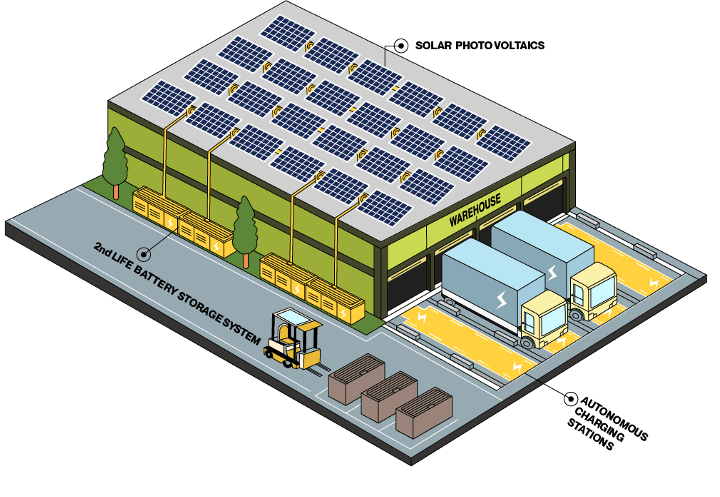
The sketch below illustrates our first vision for such a circular electrification solution.
Theoretical Framework and Method
Our approach is grounded in socio-technical transition theory, focusing on system innovations and the interplay of technological, cultural, political, and infrastructural elements. This perspective enables us to address the complexity of transitioning to sustainable freight transport systems. We employ a “transition design approach,” focusing on system-level changes. This includes developing a vision for transition, exploring theories of change, understanding postures and mindsets, and pioneering new design methods. Our methods encompass interviews, workshops, surveys, field experiments, and backcasting techniques.
Project Organization
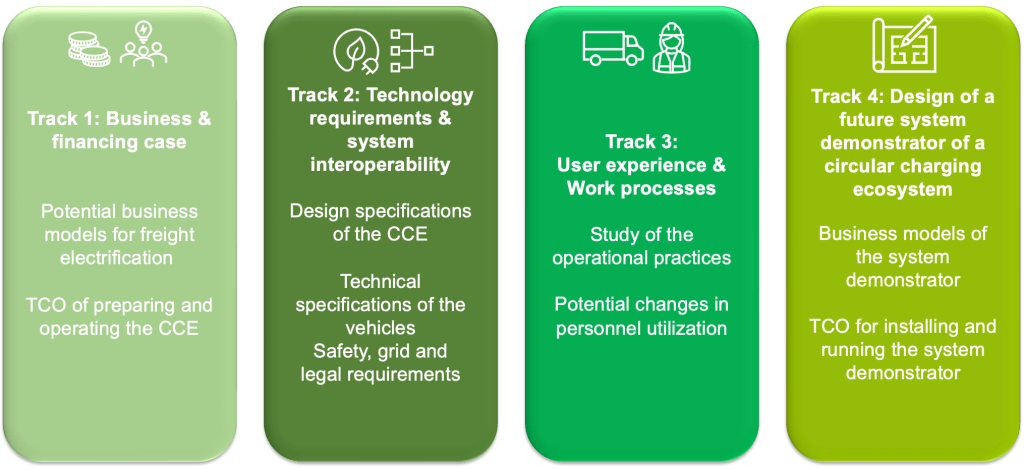
CIRC-s is structured into four interconnected research tracks and each track addresses specific aspects of the transition to electrified freight transport, from business models and technological specifications to user experiences and systemic design.
Expected Outcomes and Impact
CIRC-s aims to deliver actionable insights into sustainable freight electrification, including:
- Refined business models and financing strategies
- Technical specifications for efficient electrification systems
- Enhanced understanding of user experiences and operational practices
- A blueprint for a future system demonstrator
These outcomes will not only advance scientific understanding but also provide tangible benefits to our consortium members, ranging from policy guidance to innovative business solutions.
INTERORG Research Group
Örebro University School of Business
Fakultetsgatan 1
Örebro, Sweden
 CIRC-S Project Website