We met for our last data gathering workshop in early November, hosted again by our partners at Närkefrakt in Pilängen, Örebro. The topic of this workshop was very exciting, as we got to talk to the end users of electric trucks: the drivers. The main purpose was to discuss the experience of drivers who already use electric trucks daily. This follows one of the overall goals of the project, which is to investigate changes in operational practices (e.g., route scheduling, assigning vehicles and drivers), and personnel utilization (e.g., acceptance of EV by drivers, skills needed for operating the vehicles). We were motivated by the fact that the end users are often overlooked in current literature, despite the fact that they are very key for successful decarbonization of road freight transport.
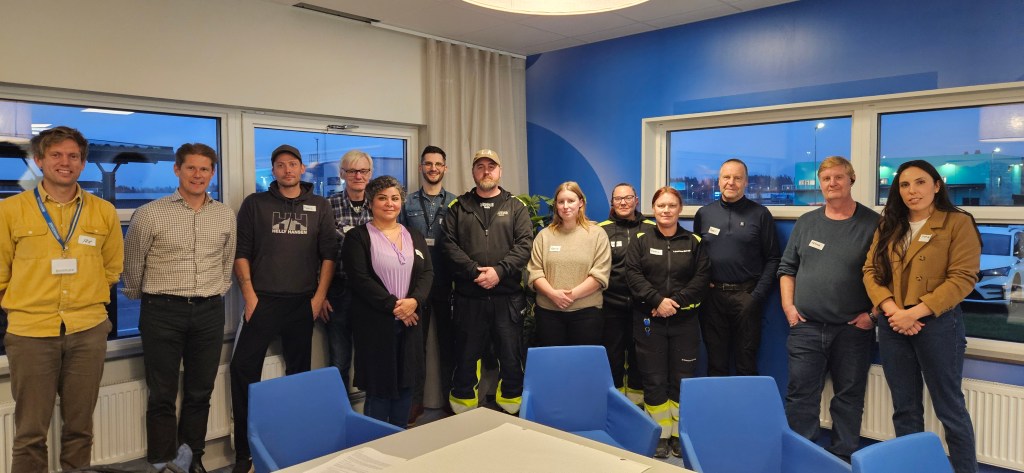
We divided our workshop in three main sections, based on the main concerns in current literature. First, we discussed vehicle performance and economic viability. All drivers appreciated the “softer” (smoother, quieter, easier to handle) experience of driving electric vehicles, and expressed no desire to go back to diesel trucks. Since the operation is quieter, the operation of the truck is easier (for example, for those operating crane trucks, the communication on site with customers is much more efficient as there is no engine noise when operating the crane). Despite this, some found electric trucks less powerful, especially when fully loaded. The additional battery weight reduces payload capacity, which affects companies’ ability to carry as much cargo as they would with diesel trucks. Another issue is maintenance of the trucks, since electric trucks require specialized service and even small issues might lead to downtime.
Charging infrastructure and battery-related issues are absolutely key to the adoption of electric vehicles and thus obvious choice for our next section. Overall, drivers who are able to charge at at the depot or at customers’ site report that the effects of having to charge the trucks are not as severe as initially expected. Those who relied on public charging reported more operational difficulties and impracticalities but expressed hope that the regional public charging infrastructure is improving. Still, drivers expressed that the lack of a comprehensive charging network severely limits the operational range of electric trucks. They noted that this leads to delays as they sometimes must wait for charging stations or plan routes specifically around charging points, reducing overall efficiency. They voiced concerns about battery performance during colder months (citing that the performance and range is affected by all weather changes), where energy efficiency is reduced, leading to higher energy consumption and longer charging times. Drivers anticipated that these issues would become more pronounced in winter, as most of them had not yet experienced a full season of cold weather driving in electric vehicles. The driver who had experienced a full winter reported that the issues were not as high as she expected but were still significant.

Finally, Customer relationship and perceived environmental benefits was the final point of discussion. It was reported that customers expressed appreciation for companies’ efforts to use electric trucks, often viewing it as a commitment to sustainability. For the drivers themselves, having eco-friendly vehicles sometimes enhances the perception of their work and strengthens client loyalty. However, this was not universal, as most clients still prioritised cost over sustainability, particularly considering current economic uncertainties, limiting the impact of electric trucks on client relations across the board. There were also concerns about providing flexibility to customers. It is much more difficult to provide unplanned, ad-hoc rides for customers when battery capacity and range needs to be planned more carefully. Drivers expressed that it is not comfortable to suddenly start declining these, as they previously took pride in being flexible and provide these additional rides. In addition, there was a common sentiment that while reducing emissions is beneficial, electric truck technology might not yet be sufficient to replace diesel entirely, especially for those operating over long distances. This can be mitigated for now by keeping older diesel trucks instead of selling them to provide backup, but there were concerns about long-term viability of this solution.
Many thanks to Närkefrakt for arranging this and to the drivers who were very patient and welcoming with our questions! We even got invited to take a ride with them one day to get more insights on the day to day practices, which we will surely take soon!
 CIRC-S Project Website